
Why World Cup 2026 Will Be the Most Watched Tournament Ever
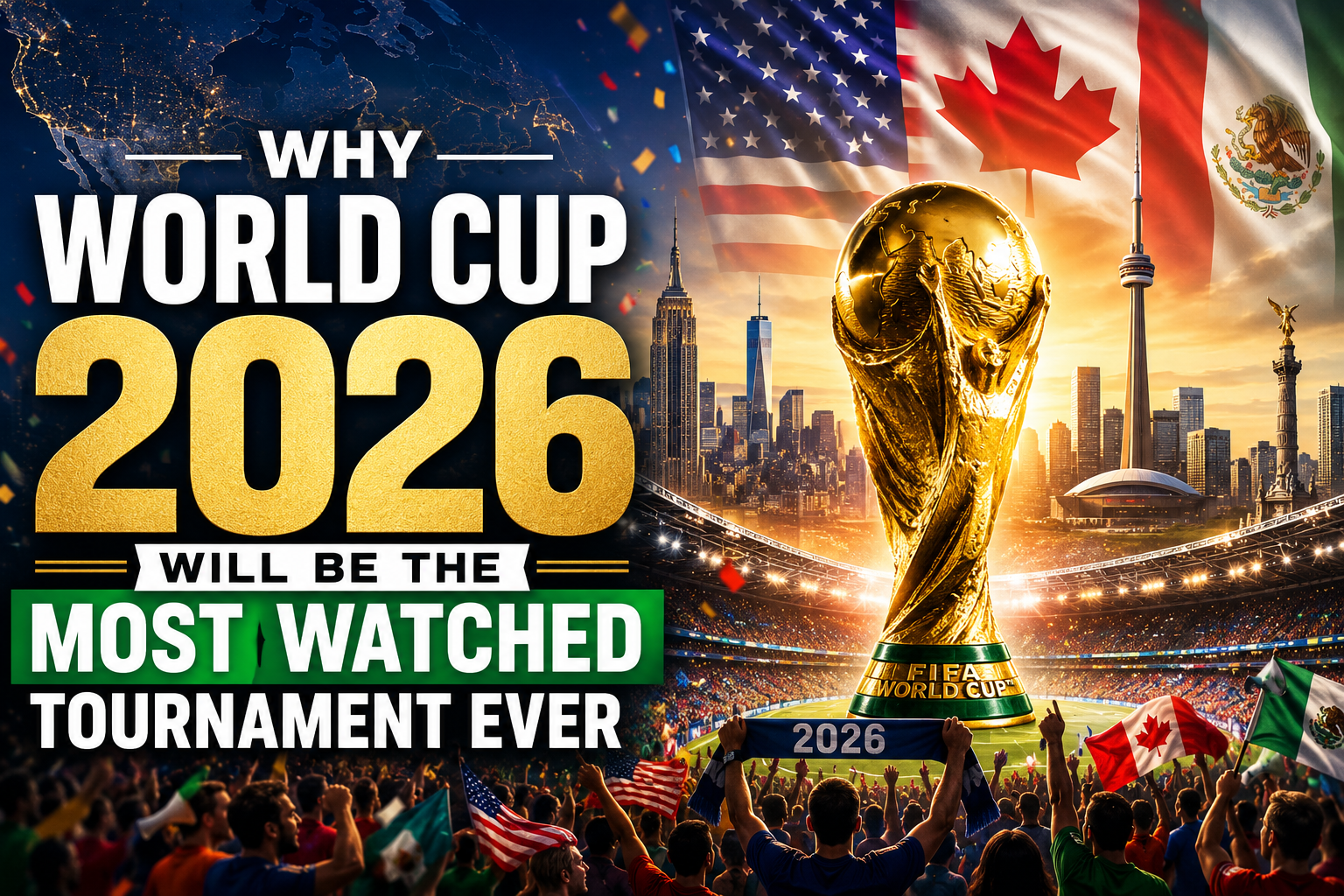
Every World Cup breaks records.
Bigger audiences, wider reach, more engagement. It’s one of the few events that consistently grows, no matter how much it has already expanded.
But 2026 feels different.
Not just because it’s bigger—but because everything around how people watch football has changed. And when you combine that with the scale of the tournament itself, it becomes clear why many expect this edition to become the most watched in history.
From a media perspective, World Cup 2026 predictions are not just about results—they’re about reach.
More Teams, More Nations, More Viewers
The most obvious factor is the expansion to 48 teams.
More teams mean more countries involved. More countries mean more fans emotionally invested in the tournament.
Every additional nation brings:
- Millions of new viewers
- Increased local media coverage
- Stronger engagement across regions
Even smaller football markets contribute significantly when they are directly involved.
The result is a broader global footprint than ever before.
A Perfect Time Zone Advantage
One of the biggest barriers to global viewership has always been timing.
Matches played in inconvenient time zones can limit live audiences, even for major games.
In 2026, with matches hosted across United States, Canada, and Mexico, scheduling becomes more flexible.
Games can be distributed across different time slots, making them accessible to:
- European audiences
- Asian viewers
- South American fans
This overlap significantly increases potential global reach.
The Streaming Revolution
Previous World Cups were dominated by traditional television.
That’s no longer the case.
Streaming platforms now play a major role in how audiences consume sports. Viewers are no longer limited to watching matches on a single screen—they can access games on phones, tablets, and multiple devices simultaneously.
This shift has two major effects:
- It increases accessibility
- It expands total audience numbers
Younger audiences, in particular, are more likely to engage through digital platforms, which contributes to overall growth.
Social Media Amplification
Watching a match is no longer a passive experience.
Fans interact in real time—sharing reactions, highlights, and opinions across social media platforms. Every goal becomes a global moment within seconds.
This amplification effect means that even people who aren’t watching full matches are still engaged with the tournament.
In many ways, the World Cup is no longer just broadcast—it’s continuously shared.
Star Power and Global Appeal
The presence of globally recognized players also drives viewership.
Stars like Kylian Mbappé, Vinícius Júnior, and Jude Bellingham attract audiences beyond their national teams.
Fans don’t just watch for their country—they watch for players, moments, and individual brilliance.
This crossover appeal increases engagement across different markets.
A Tournament Built for Scale
The structure of the 2026 World Cup supports higher viewership.
More matches mean more content. More content means more opportunities for engagement.
Unlike previous tournaments, where the number of games was limited, this format creates a continuous stream of matches, highlights, and narratives.
For broadcasters and platforms, this is ideal.
For fans, it means constant access to football.
The Role of Global Markets
Football’s growth in regions like North America and Asia continues to expand.
Hosting the tournament in North America brings the event closer to one of the largest media markets in the world. At the same time, improved access in Asia ensures that audiences there remain engaged.
This combination of established and emerging markets creates a unique balance—one that supports record-breaking viewership.
Connecting Viewership With Predictions
As audience numbers grow, so does interest in analysis, forecasts, and match expectations.
Fans don’t just watch—they want context. They want to understand what might happen next.
If you’re following the tournament closely and want deeper insights into team performance, match outcomes, and evolving scenarios, you can explore 👉 World Cup predictions to stay connected with the competition beyond the broadcast.
Final Thoughts
The 2026 World Cup is designed for scale.
More teams, more matches, more platforms, and more ways to engage. It reflects not just how football is played—but how it’s consumed.
Watching the World Cup is no longer limited to a television screen. It’s a global, multi-platform experience that reaches audiences in real time.
And with all these factors combined, it’s not just likely that 2026 will be the most watched tournament ever.
It’s almost inevitable.